que paso
Linuxiac reports that Shadowfetch Linux 3.0, a Debian Testing-based distribution with KDE Plasma 6, launches Fireline to run AI coding agents in more restricted and reversible workspaces. Its reported features include Bubblewrap sandboxing, Btrfs or archive-based checkpoints, audit records, four first-party MCP servers and hardware-aware recommendations for locally run models.
Linuxiac reports that Shadowfetch Linux 3.0, also called “Umbra” and carrying the Fire Edition subtitle “Backfire,” is a new release of the project’s Debian Testing-based Linux distribution. It uses KDE Plasma 6 and adds a stronger focus on running autonomous AI coding agents. The article identifies Fireline as the release’s central new system. Its stated purpose is to limit what coding agents can access, track the changes they make and give users a way to reverse those changes. That makes the AI-agent controls a direct part of the product’s release, rather than incidental software bundled with a general-purpose operating system.
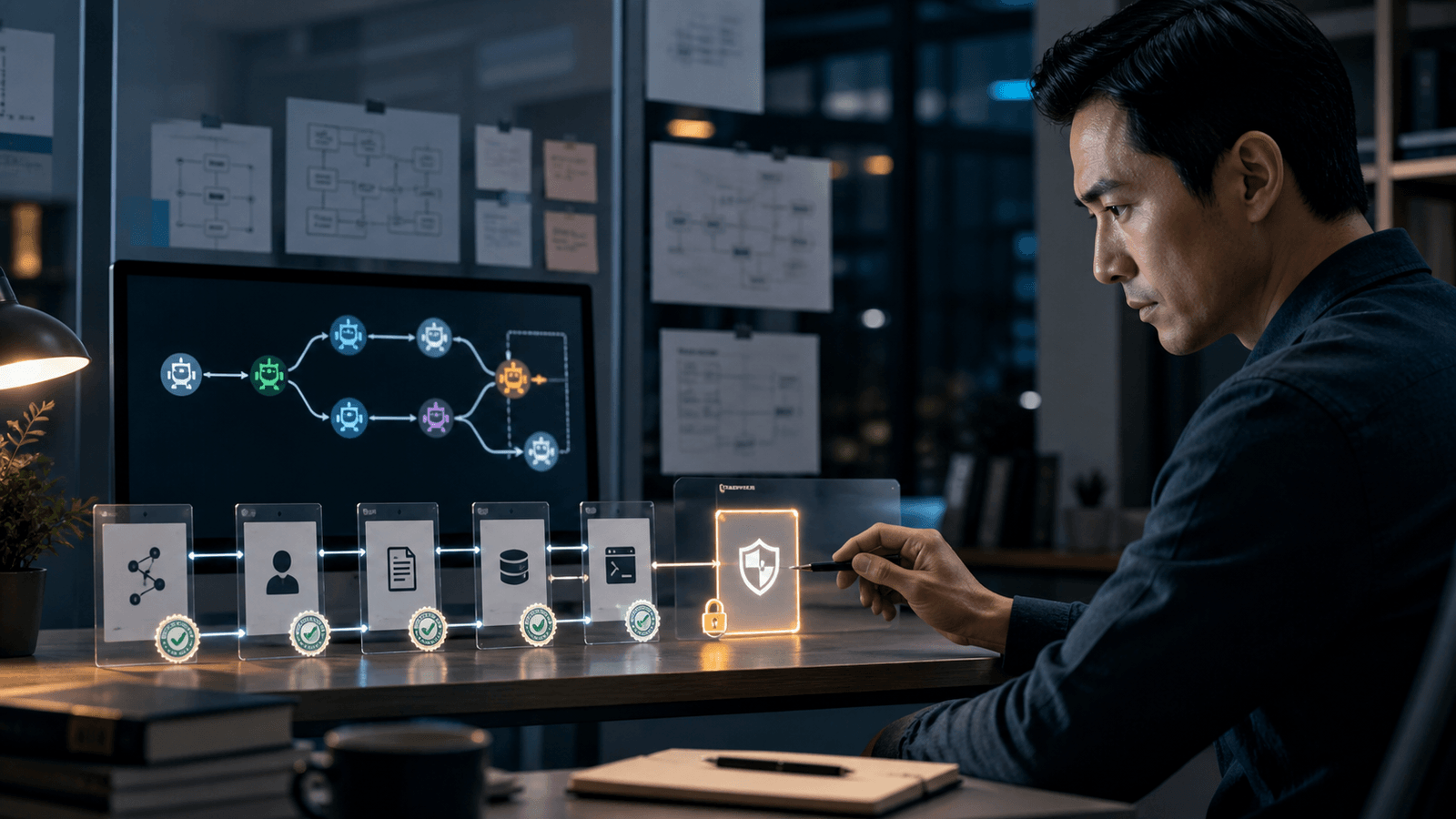
Linuxiac reports that the first Fireline component, shadowfetch-firebreak, can launch tools including Claude Code, Codex CLI, Cursor and Aider inside a Bubblewrap sandbox. Within that environment, the operating system is mounted read-only, while write access is restricted to a selected project under the user’s “~/Workspaces” directory. The article says users can disable network access and that environment variables containing API keys or authentication tokens are removed before an agent starts. Each session reportedly creates a checkpoint beforehand and records an audit entry through systemd’s journal. The source does not provide an independent assessment of whether these controls prevent every relevant form of access or credential exposure.
A second component, shadowfetch-checkpoint, is reported to snapshot individual workspaces and compare their state before and after an agent session. On systems using Btrfs, Linuxiac says the tool can use subvolume snapshots; on other filesystems, it falls back to portable archives. The article says users can inspect a content-based diff and restore the workspace to its prior state when necessary. These features address a practical problem with coding agents: a technically successful change can still damage unrelated files or create hard-to-review modifications. However, the source does not report recovery times, storage requirements, failure cases, or tests showing how reliably the comparison and restore process works.
Linuxiac also reports that Shadowfetch 3.0 includes four first-party Model Context Protocol servers. They are described as controlled interfaces for system information, restore points, workspace checkpoints and restricted file access. The article identifies a read-only “passport” service that exposes privacy-scrubbed system information, alongside Phoenix, checkpoint and filesystem services, and says a command can generate configuration for compatible AI clients. Another tool, shadowfetch-ai-ignition, reportedly checks available graphics memory and recommends locally runnable models, with a catalog focused on Qwen3, Devstral and gpt-oss. Linuxiac says the distribution includes no models and that downloads require an explicit user action. It also reports that the release is available only for 64-bit x86 systems.
Lea la fuente principal: linuxiac.com ↗
Por qué es importante
AI coding agents can modify files, use tools and potentially access credentials or networks. The controls described by Linuxiac are aimed at reducing the consequences of those actions by limiting access, recording changes and enabling restoration, although the source provides no independent security audit, benchmark or evidence of real-world effectiveness.
The practical importance of Fireline lies in the permissions given to coding agents. An agent that can edit a project, call tools or reach the network has more opportunity to cause damage than a conventional autocomplete system. The controls described by Linuxiac attempt to narrow that authority to a chosen workspace and, optionally, remove network access. Limiting write access and stripping credentials could reduce the impact of a mistaken command or an agent response influenced by untrusted project content.
Checkpoints and audit records could also change how developers review agent work. A before-and-after comparison gives users a way to see the scope of modifications, while a restore point offers a recovery mechanism when an agent makes an unwanted change. That is especially relevant for long-running or multi-step coding tasks, where a user may not inspect every intermediate action. Linuxiac’s account describes these capabilities but does not include independent tests, sample audit records, measurements of diff accuracy or evidence that restoration is complete in all supported filesystem configurations. Users should therefore treat rollback as a reported feature, not as a proven guarantee.
The reported MCP services matter because they define narrower interfaces through which compatible AI clients can interact with the system. Instead of giving an agent unrestricted operating-system access, the services are intended to expose selected information and operations such as reading restricted files or managing checkpoints. A privacy-scrubbed, read-only system-information service could also reduce unnecessary disclosure about the host machine. Linuxiac does not independently verify the services’ permissions, configuration defaults or behavior under malicious or confused tool calls. It is also unclear from the source whether all compatible clients enforce the same restrictions once configuration is generated.
The local-inference feature addresses a separate adoption barrier: choosing models that fit a user’s hardware. Linuxiac says shadowfetch-ai-ignition uses available VRAM to recommend models rather than presenting a generic catalog. That could make local AI experimentation easier and keep model downloads user-controlled, while the absence of bundled models limits the distribution’s storage and licensing burden. The source does not state which graphics cards are supported, how recommendations are calculated, what performance users should expect, or whether the listed models are available under consistent licenses. Those omissions limit what can be concluded about the tool’s usefulness outside the configurations tested by Shadowfetch.
Qué ver a continuación
The key questions are whether Fireline’s restrictions withstand realistic agent behavior, how usable its rollback and audit features are, and whether the distribution gains adoption beyond technically experienced Linux users. Further documentation, independent testing and evidence about supported hardware and model configurations would clarify its practical value.
Independent security testing is the most important next step. The article reports design features, but it does not cite a third-party audit, penetration test, adversarial evaluation or reproducible test suite. Reviewers should examine whether the Bubblewrap configuration blocks access to sensitive host resources, whether environment-variable filtering covers common credential locations, and whether disabling network access remains effective for every process an agent can start. Results should distinguish documented defaults from protections that require careful user configuration.
The release also warrants testing under ordinary failure conditions. Useful evidence would include how checkpoints behave when an agent changes many files, removes data, modifies permissions or interrupts a session, and whether portable archives provide the same practical recovery as Btrfs snapshots. Audit records should be easy for users to interpret and sufficiently complete to identify which tool calls and file changes occurred. Linuxiac reports that these facilities exist, but the source leaves their limits, overhead and failure behavior unknown.
Availability and compatibility will determine whether the product reaches users who need safer agent workflows. Linuxiac reports that Shadowfetch 3.0 is limited to 64-bit x86 systems and remains based on Debian Testing with KDE Plasma 6. The article does not specify hardware requirements beyond the local-model tool’s use of VRAM, nor does it say how the MCP services work with particular clients or whether all named coding agents support the generated configuration. Future release notes, installation documentation and user reports could clarify those practical constraints.
Finally, claims about the wider distribution should be separated from the new Fireline functionality. Linuxiac reports that Shadowfetch retains features such as Phoenix restore points, Fireproof update simulation, optional Buzz local-AI workspace, LUKS2 encryption, signed distribution artifacts and no telemetry. The source does not independently confirm those claims or explain how telemetry absence is verified. It also does not report adoption numbers, security incidents, performance results or user reactions. Those unknowns matter when judging whether the release represents a dependable safety improvement or primarily a set of promising controls that still require validation.