O que aconteceu
Tempo launched Workforce Intelligence, an Atlassian Marketplace app that SiliconANGLE says connects AI activity and spending with the Jira issues associated with the work. The product combines AI and human-effort records, cost data and performance measures within Jira, according to the report.
SiliconANGLE reports that Tempo introduced Workforce Intelligence on August 25, 2026, describing it as an Atlassian Marketplace app for connecting artificial-intelligence usage and cost to individual Jira issues. Tempo sells planning and portfolio software for the Atlassian ecosystem. The company positions Workforce Intelligence as the newest part of what it calls Intelligent Portfolio Orchestration, and the report says the app is available now in the Atlassian Marketplace.
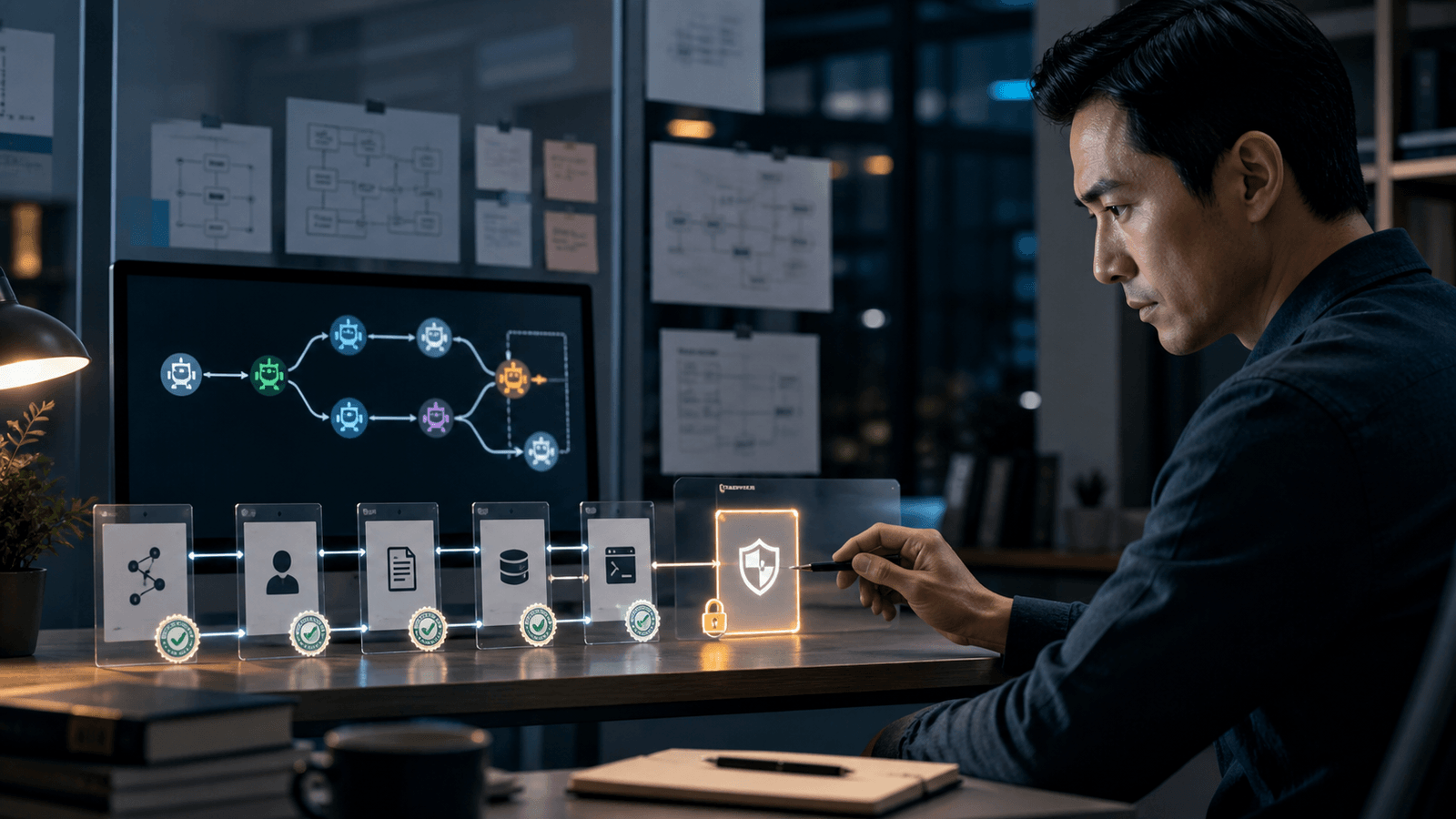
According to SiliconANGLE, the product attaches AI activity and human effort to the specific Jira work item that the effort supported, then rolls those records up into larger bodies of work. Cost and performance information are placed on the same record. The article says the system is intended to give engineering managers cycle-time comparisons between AI-assisted work and other work, along with views of AI spending, active users and costs across strategic initiatives.
SiliconANGLE reports that inference application-programming-interface telemetry is placed in the same work record as blended human and AI effort. Tempo Chief Technology Officer Shams Chauthani told the outlet that the product correlates an AI session directly to a commit. The article says the attribution is native to Jira, so engineers do not have to change how they log work. The report does not specify which AI providers, development environments or telemetry formats are supported.
The launch is presented against a backdrop of tighter scrutiny of enterprise AI budgets. SiliconANGLE cites Forrester research saying fewer than one-third of decision-makers can connect AI’s value to financial growth and reports that the firm expects enterprises to defer one-quarter of planned AI spending to 2027. The article also quotes Chris Marsh, a research director at 451 Research by S&P Global, who described attribution data as a necessary foundation but said it does not by itself establish value. Tempo’s reported customer base exceeds 30,000, including Cisco, Airbus and Oracle, but the report does not say that those companies use Workforce Intelligence.
Leia a fonte primária: siliconangle.com ↗
Por que isso importa
The launch targets a practical enterprise problem: organizations may know how much they spend on AI without being able to connect that spending to delivered work. If the reported integrations work as described, managers could evaluate AI-assisted work at the issue, project and initiative levels rather than relying only on aggregate usage dashboards.
SiliconANGLE’s report identifies a measurement gap that matters as companies move from experimenting with AI to managing it as an operating expense. A total AI bill can show adoption or consumption, but it does not necessarily show which work benefited, how much human effort remained involved or whether the spending was attached to a funded business priority. Workforce Intelligence is designed around that more granular accounting problem.
The reported Jira integration could make AI spending more legible to engineering and portfolio managers. Connecting usage and costs to issues would let a manager inspect AI-assisted work alongside the task’s status and the broader initiative it supports. That could help organizations compare different work patterns and identify where AI use is associated with shorter or longer cycle times. Those comparisons would still be measurements of association unless organizations establish stronger methods for evaluating causation.
The product also reflects a shift in enterprise AI governance from simply observing whether an agent or model ran to documenting what work the system was involved in. SiliconANGLE reports Tempo’s executives arguing that leaders need records of what AI produced, not only dashboards showing that AI was used. The inclusion of human effort is potentially important because many software tasks combine automated output, review, correction and conventional engineering work rather than being completed by AI alone.
The report does not establish that Workforce Intelligence improves productivity, reduces costs or produces accurate attribution in practice. Its analyst commentary underscores that data capture is only one part of realizing value: Marsh said organizations also need trained employees, clear rules and leadership support. The article contains company descriptions and executive claims, but SiliconANGLE’s account does not independently confirm the product’s technical performance, measurement accuracy or results at customer organizations.
O que assistir a seguir
The key questions are whether the product can reliably connect inference telemetry to commits across real engineering environments, how broadly it supports AI tools and providers, and whether customers obtain decision-useful productivity or cost evidence. SiliconANGLE does not report pricing, independent testing, customer results or the product’s data-governance terms.
The first practical test is deployment beyond the announcement. SiliconANGLE reports that Workforce Intelligence is available in the Atlassian Marketplace, but it does not provide pricing, licensing limits, implementation requirements or adoption figures. Customers will need to know whether installation is sufficient or whether engineering teams must configure repositories, model providers, identity systems and telemetry pipelines before the reported attribution can work.
Technical verification will matter because the core promise depends on linking several records reliably: an AI session, a Jira issue, a commit, human effort and a cost. SiliconANGLE reports that Tempo says the session-to-commit correlation is direct and verifiable, but the article does not describe the matching method, error handling or cases in which one AI session contributes to multiple issues. It also does not say how the system handles uncommitted work, shared code changes or AI use outside supported integrations.
Organizations should also examine how the resulting comparisons are interpreted. A shorter cycle time for AI-assisted work could reflect task selection, team experience, review requirements or differences in project complexity rather than an AI effect. SiliconANGLE reports that Marsh emphasized training and clear rules, suggesting that governance and workforce practices will shape the usefulness of the data. The report provides no independent methodology for measuring productivity or determining whether cost attribution is complete.
Important unknowns remain around scope and safeguards. SiliconANGLE does not identify the AI models or providers covered, the retention period for telemetry, access controls for employee-level records, treatment of sensitive code or the product’s pricing. It also does not report independent customer evaluations, audits or publicly documented results. Those details will determine whether the launch becomes a useful accounting and governance layer for AI-assisted work or mainly another enterprise dashboard.