The short version
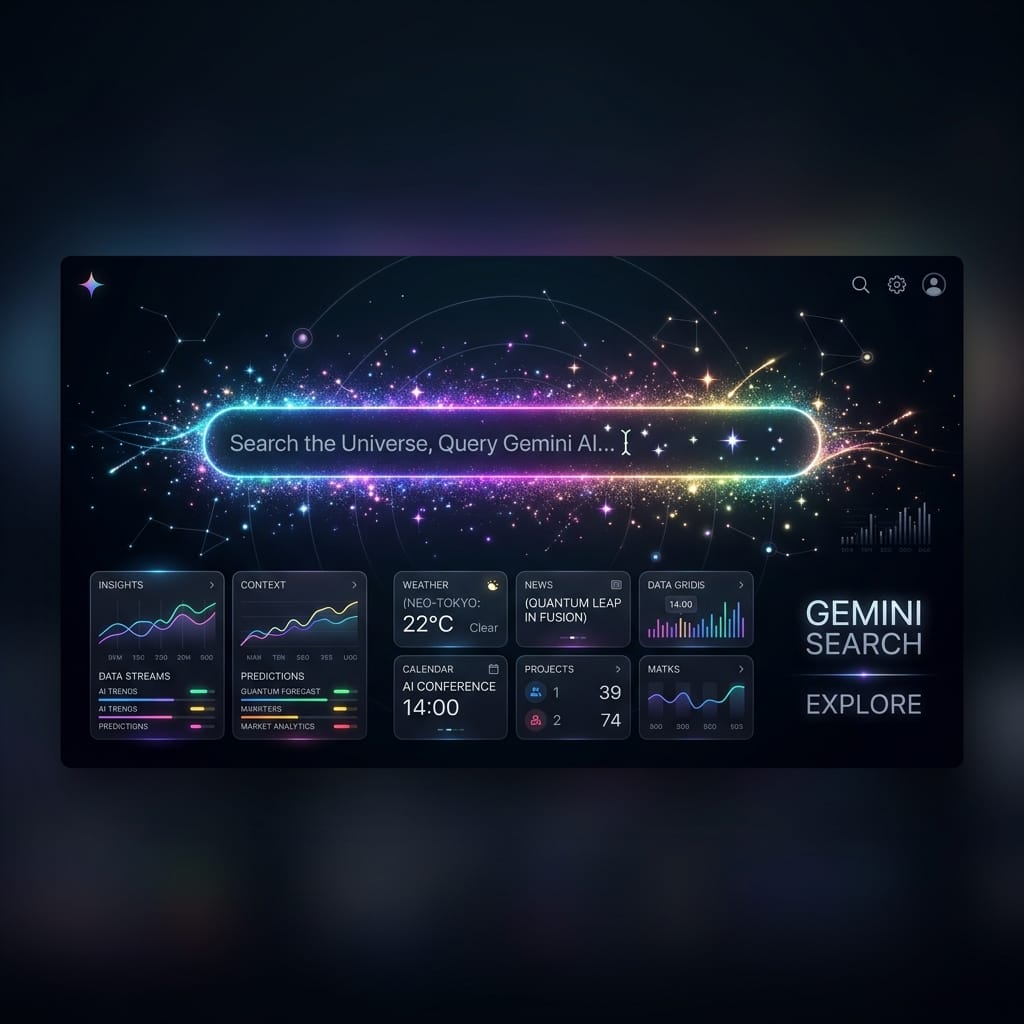
At Google I/O 2026, Google introduced a sweeping overhaul to its search engine, centering the experience around its latest Gemini 3.5 Flash model. The update introduces "Agentic Search," which allows the search engine to execute multi-step research, build custom mini-applications, and monitor information over time on behalf of the user.
Instead of simply returning a list of links or static paragraphs, the search bar can now generate functional interactive tools—such as comparison calculators, travel itineraries with live bookings, and personalized study guides—directly within the search interface.
What happened
The core of the upgrade is the transition from answers to execution. When a user enters a complex query, the underlying Gemini 3.5 Flash model determines whether the task requires interactive tools. If it does, Google's systems generate a lightweight, custom-tailored interface (referred to as a "mini-app") in real-time.
For instance, searching for a comparison of different mortgage options based on complex personal criteria no longer returns static articles. Instead, Google Search builds a custom calculator with sliders for rates, deposit amounts, and loan terms, prepopulated with real-time data from financial institutions.
Google also announced "Search Monitoring," which allows users to pin a search query to a dashboard. The agent will continue to run in the background, tracking price drops, changes in regulations, or stock availability, and notify the user when key thresholds are met.
Under the Hood: Web Component Generation and Safe Sandboxing
The technology behind Google's "mini-apps" relies on real-time generation of secure, isolated Web Components. The Gemini 3.5 Flash model outputs structural configuration JSON and template layouts, which are then compiled on Google's edge nodes and executed inside an isolated iframe sandbox on the client browser.
To prevent malicious script execution or data exfiltration, these sandboxed elements are barred from direct access to cookies, window parameters, or local storage. Furthermore, Google implements strict visual guidelines, forcing generated interfaces to use a standard design library to prevent spoofing or styling exploits.
Why it matters
This update accelerates the shift from directory-style search to action-oriented computing. By embedding Gemini 3.5 Flash directly into the primary search flow, Google is training millions of consumers to interact with AI agents as a normal part of accessing the internet.
However, the shift raises significant concerns for the wider web ecosystem:
- Referral Traffic Loss: If users can calculate, compare, and plan entirely within the Google Search interface, traffic to independent websites, blogs, and tool providers will likely drop significantly.
- Content Ownership and Monetization: The agent relies on scraping and analyzing content from the open web to build its tools. Publishers are questioning whether they are receiving fair compensation if their content is used to create search tools that prevent users from visiting their pages.
- Data Quality and Liability: If Google generates a custom financial calculator or travel planner that makes a mistake, the responsibility for those errors becomes a difficult legal and user-trust issue.
What to watch next
The rollout is starting immediately for users opted into Google Labs, with a wider release planned throughout the year. The biggest question is how web creators and publishers will adapt to the decline in organic referral traffic. We should watch for changes in SEO strategies, new paywall frameworks designed to block AI crawlers, and the response from competing platforms like OpenAI's SearchGPT and Perplexity, which are also racing to deploy agentic search features.