The short version
Meta is testing a personalized AI assistant project internally codenamed "Muse Spark." The system aims to run across Meta's hardware lineup, including Ray-Ban Meta smart glasses and Meta Quest headsets, to execute proactive and autonomous tasks on behalf of users in their daily environments.
Rather than waiting for conversational prompts, Muse Spark relies on real-time visual and audio data streams to anticipate user needs. The assistant can identify objects in a room, suggest actions, and connect to external smart-home systems or messaging services to coordinate tasks automatically.
What happened
Reports from sources close to the project suggest that Muse Spark is designed as a foundational shift for Meta's AI services. Previously, Meta AI functioned as a typical chatbot or basic voice assistant. Muse Spark upgrades this capability by utilizing a multimodal model optimized for continuous, low-latency sensory processing.
For instance, when wearing smart glasses, a user could glance at ingredients in their pantry, and Muse Spark could suggest a recipe, cross-reference it with their digital calendar to check cooking times, and send a shopping list of missing ingredients to their phone.
The prototype is also capable of automating digital workflows. It can summarize incoming audio notifications, dictate replies in the user's natural voice tone, and coordinate calendar appointments based on conversational cues it overhears (with user consent).
The Hardware Architecture: Llama-On-Device and Neural Co-Processing
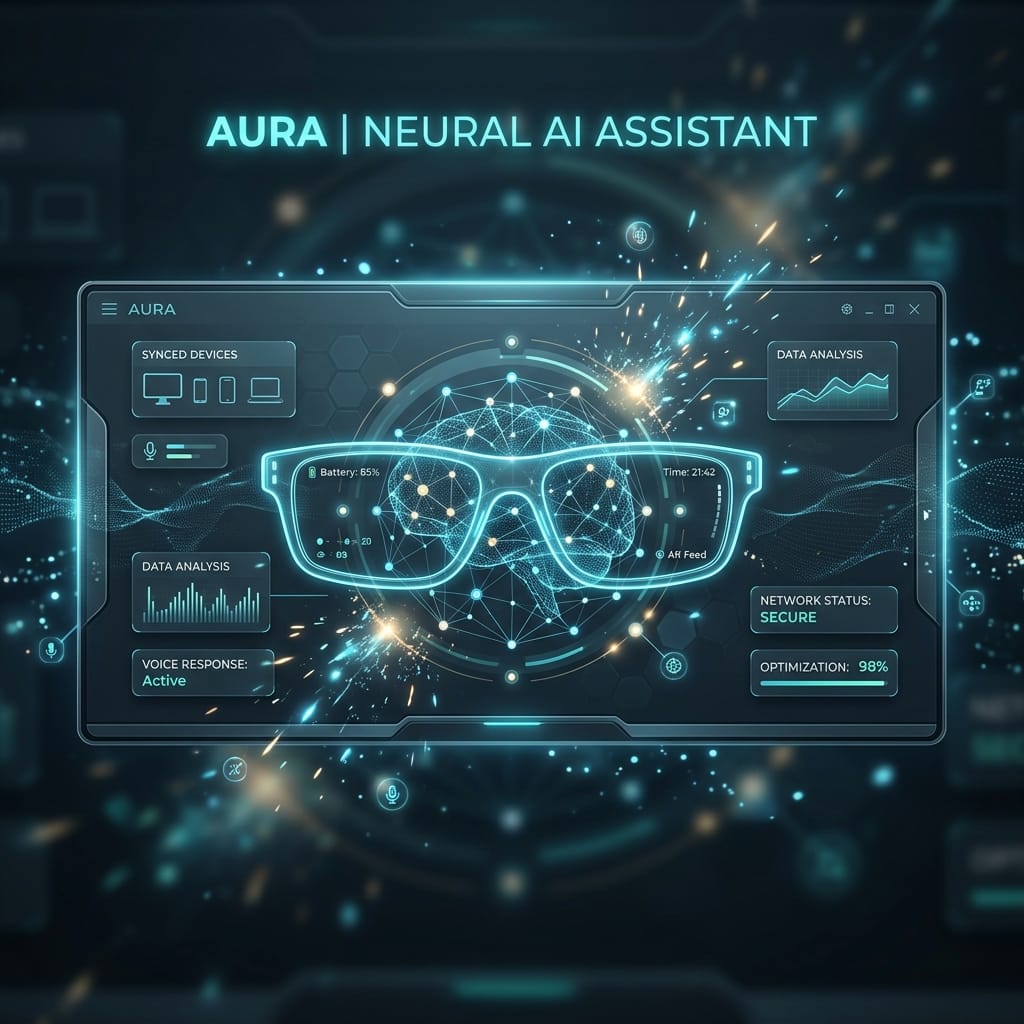
Technically, Muse Spark leverages a hybrid architecture combining local, on-device neural processing with low-latency edge servers. On-device models run on specialized Qualcomm Snapdragon AR chips, handling visual classification and voice filtering locally to conserve battery.
When complex queries arise (such as multi-step scheduling or deep semantic scene analysis), the glasses transmit encrypted, anonymized tokens to Meta's regional edge servers. This dual-layer processing is key to sustaining a wear-time of over 6 hours on small form-factor frames, addressing a major challenge of wearable AI devices.
Why it matters
Muse Spark highlights how consumer AI is moving from cloud-based text inputs into physical, wearable hardware. By processing live video and audio streams, the assistant can understand physical context in a way desktop interfaces cannot.
This introduces major privacy and regulatory questions:
- Continuous Audio and Video Recording: Having an assistant constantly analyzing sensory input raises concerns about bystander consent and visual privacy.
- Data Protection: Processing visual data in real-time requires secure, localized compute or highly encrypted transmission layers to prevent data leaks.
- User Autonomy: As AI systems transition from reactive tools to proactive agents, defining boundaries for what the assistant can decide on its own becomes a key design challenge.
What to watch next
Meta has not announced a public release date for Muse Spark, but developer betas are expected to integrate with the Ray-Ban Meta glasses firmware later this year. We should watch how Meta addresses the regulatory challenges of wearing camera-equipped AI devices in public spaces, the battery life trade-offs of continuous sensory processing on lightweight frames, and how hardware competitors like Apple, Google, and Snapchat respond with their own ambient computing initiatives.