The short version
The United States Department of Defense (DoD) has finalized agreements with several leading technology companies to deploy commercial artificial intelligence systems on classified military networks. The agreements cover top frontier models from OpenAI, Google, Nvidia, Microsoft, Amazon, SpaceX, and Oracle, enabling secure access to generative AI for defense staff.
This deployment marks a major change in military software strategy. Instead of spending years building bespoke systems from scratch, the Pentagon is moving to integrate commercial, off-the-shelf software to handle high-volume intelligence triage, translation, software development, and administrative workflows.
What happened
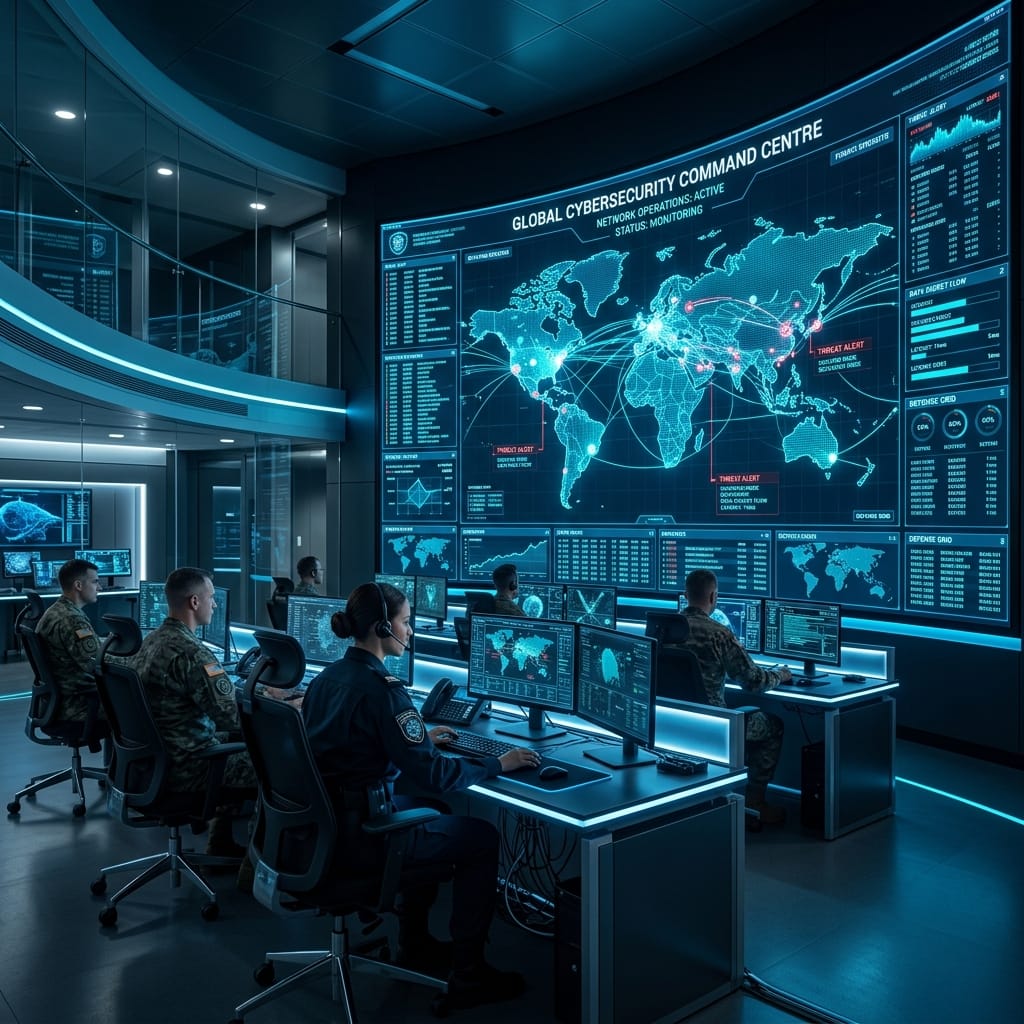
The initiative, which has been in negotiation for several months, aims to bring large language models (LLMs) and advanced data processing systems into classified environments, including Secret and Top Secret networks. Historically, these environments have been highly restricted, limiting military staff to legacy tools that lack the capabilities of modern commercial AI.
Under the new agreements, tech providers will deploy hosted versions of their models on secure cloud infrastructure managed by Microsoft, Google, Oracle, and Amazon. The systems are designed to operate within air-gapped environments, ensuring that military queries and classified data are not used to train public models or exposed to external networks.
Crucially, the rollout focuses on administrative and intelligence analysis tools. The DoD has stated that the initial phase will cover document synthesis, translation of foreign language intelligence feeds, automated coding assistance for defense engineers, and logistics optimization.
The Technical Integration: JWCC and Classification Levels
The deployment will leverage the Joint Warfighting Cloud Capability (JWCC) contract vehicle, utilizing secure cloud infrastructure validated for Impact Level 5 (IL5) and Impact Level 6 (IL6) workloads. IL5 covers controlled unclassified information (CUI) and mission-critical systems, while IL6 is designated for Secret-level national security systems.
By utilizing air-gapped deployments on JWICS (Joint Worldwide Intelligence Communications System) and SIPRNet (Secret Internet Protocol Router Network), the DoD ensures that data flows are entirely contained within government-owned container environments. These container systems isolate the weights of models like GPT-5.5 and Gemini 1.5/3.5, allowing local inference without any external data exfiltration pathways.
Why it matters
Deploying commercial frontier models in military contexts highlights how critical generative AI has become to national security and operational planning. The decision to skip long development cycles in favor of commercial tools shows that the Pentagon is prioritizing speed and capability over custom military-built software.
However, the introduction of LLMs to classified networks introduces unique risks:
- Accuracy and Hallucinations: In a defense or intelligence context, a hallucinated fact or misconstrued report can lead to significant consequences.
- Information Security: While data is kept within secure cloud boundaries, managing access controls across different agencies and security clearances is highly complex.
- Model Auditing: Commercial models are updated frequently, making it difficult for defense safety teams to consistently audit and verify model behavior.
By moving commercial models behind classified firewalls, the DoD is betting that the productivity gains in intelligence processing will outweigh the challenges of managing AI reliability.
What to watch next
The immediate test will be how effectively these models handle unstructured, multilingual intelligence feeds. Security and defense watchdogs will also monitor the boundaries of these deployments to ensure that generative models remain confined to analysis, logistics, and planning, and are not integrated into autonomous target identification or kinetic systems.
Additionally, the contracts will likely accelerate a broader global trend, with other nations and defense coalitions seeking similar partnerships with domestic tech leaders to modernize their intelligence infrastructure.